Liebster Blog Award!

The rules for the Liebster Award are very simple: You are required to thank the person who nominated you, answer the 11 question they have asked you, nominate 11 other people and ask them 11 questions in return. According to the guidelines the Liebster award should be sent to bloggers with less than 200 followers so that new bloggers can see how awesome they are!
So thanks to Socially Oxward for nominating Anakalian Whims. It’s exciting to be noticed!
And now to answer your questions…
1. Do you think you’ll still be blogging in ten years?
If wordpress and cyberspace continue to exist, yes. I hope wordpress does not go the way of xanga and myspace, but frankly it is probably inevitable. However, before I check out, hopefully I’ll be able to get Anakalian Whims in print even if it’s just for my personal book shelf.
2. Did you ever realize that a rake was the male version of a ho(e) in the past? A rake and a ho(e)? Do you think ho is spelled with or without the e….?
Ummm… yes. And I always spell it with an e.
3. What were you thinking when you posted your first blog entry?
That I’d like to become a professional reviewer one day. Getting paid to read… what’s better than that?
4. What is humanity’s biggest flaw?
Disbelief and/or distortion of the truth of Jesus Christ.
5. What’s your first memory?
I have a handful from when I was two. I’m not sure what order they occurred in, so I’m not sure which one is first. One is falling on concrete and scarring up the backs of my hands. I have several of hanging out with my Grandpa, before he died. I’m lucky to have those, he died when I was four, I believe.
6.Why is Shakespeare so relatable?
Because everything he ever wrote has been rewritten to suit modern day times and scenarios. Every generation has their version of most of his stories. Twelfth Night becomes Yentle and She’s the Man… Romeo and Juliet becomes every romantic tragedy ever… and so on. He wrote about basic human instinct. A chick dressed as a dude will inevitably fall for the guy she becomes best friends with because best friends are what solid relationships are based on. Teenagers who think they are in love but are forced to be apart will go all melodramatic on you. It’s the way of the world.
7. Favorite punctuation mark? Explain.
I would like to say the semi colon; it’s a beautiful piece of punctuation that is often neglected. However, if you view my writing tendencies you’ll find that if I am honest my favorite to use is the ellipses. I am also a proud defender of the Oxford comma.
8. Does it bother you when people look at you in public?
Depends on why they are looking.
9. What’s the best food ever? Ever.
My Grandmother’s squash casserole. It doesn’t get better than that… it just doesn’t.
10. Someone knocks on your door. Right now. Who do you want it to be?
If I tell you, I’d have to kill you.
11.How many questions is too many questions?
13, that’s when I get tired.
Now, for my nominations:
1.Melinda McGuire is a fab lady who has done book signings at the Half Price Books in Humble a few times. She’s fun to chat with, lovely to have as a headliner for an event, and edited an awesome anthology on quilting. She also writes novels and is from Texas.
2.Joel Robison Photography probably already has too many followers to qualify for a proper nomination, but I really love his work so I’m doing it anyway. If you’ve never seen it before, I suggest you go check it out.
3.Coffee Cups in Trees is actually my old college roomie. She doesn’t post often, but she’s clever and witty and maybe she’d be more diligent with her blog if she had more followers [ahem].
4.Thinking Through Christianity writers are good friends of mine. The blog is informative and makes you use your brain. Check it out.
5.M E Foley writes about living in England from an American perspective. It’s a bit of fun and worthy of being noticed.
6.Prose is a fellow book blog written by a guy whose opinion I enjoy and respect when it comes to reading material. Met him in an online book club and following his reading is a pleasure.
7.S. Smith is the author of the Seed Savers series. It’s a fantastic book series for young adults that more people should be aware of, so I’m using this blog award to pimp her stuff. It’s awesome. Look into it.
8.Reading, Writing, Publishing, A Blog… there you have it. The name of the blog is so self explanatory it’s ridiculous. This chick is awesome. If you are a reader, you should follow her.
Technically, I’m supposed to nominate 3 more people. But I’m tired, so I quit for now. Maybe I’ll add them later.
MY QUESTIONS TO YOU (I liked the ones given to me, so I’m reusing some of them):
1. What is your favorite thing about blogging?
2. What is the most interesting thing you learned from a book this year?
3. What were you thinking when you posted your first blog entry?
4. What is humanity’s biggest flaw?
5. What is your favorite book to love?
6. What is your favorite book to hate?
7. Favorite punctuation mark? Explain.
8. Does it bother you when people look at you in public?
9. What’s the best food ever? Ever.
10. Someone knocks on your door. Right now. Who do you want it to be?
11.What is the song that’s stuck in your ear right now?
Thanks for nominating me!

Guys! Look! Guys! Project Southsea nominated us for the Liebster Blog Award! We broke out of our robotiness enough to get really excited. And then Awkward Charm nominated us! What? Thanks, guys!

The rules for the Liebster Award are very simple: You are required to thank the person who nominated you, answer the 11 question they have asked you, nominate 11 other people and ask them 11 questions in return. According to the guidelines the Liebster award should be sent to bloggers with less than 200 followers so that new bloggers can see how awesome they are!
So thanks a lot Project Southsea! I (Kiersten) wanted to thank you, but Chewitt suggested we leave you a gift later on in our post. And thanks Awkward Charm! (Although, who knows, you might find a gift too!)
Our Answers to Project Southsea
1. What made you start blogging?
K: Uh, I had…
View original post 1,576 more words
Coloring Contest!
Everyone loves a good coloring contest. At least I did as a kid. I entered them all, every one I could get my hands on. I even won a few. That’s why I’m pleased to announce the Beckwith’s Rodeo Coloring Contest.


While Away with Winston
Lords of Finance Discussion Part Two
 Title: Lords of Finance: The Bankers Who Broke the World
Author: Liaquat Ahamed
Publisher: Penguin
Genre: Economics/ History
Length: 508 pages
“Socialism is a philosophy of failure, the creed of ignorance, and the gospel of envy, its inherent virtue is the equal sharing of misery.”
Winston Churchill. That quote is really intense! But we’ve all heard it, I’m sure. And everyone knows the name Winston Churchill, has a basic idea of what he looks like, and knows where he belongs in history. Everyone knows he’s great. But beyond one little paragraph of description and some quotes you’ve heard, how much do you actually know?
The second installment of the Lords of Finance posts is in regards to Parts 2&3 of the book. Actually, it’s in regards to the parts in those parts that talked about Winston Churchill. It was during these segments that I realized how much I didn’t know about him at all.
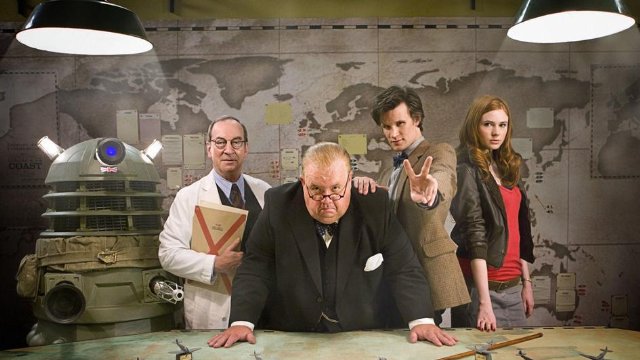 All of my knowledge of the man prior to this book was based in a few intense quotes, a lot of school propaganda, and a few character appearances in Doctor Who episodes. Frankly, prior to reading this book I didn’t feel much inclined to study up on Churchill, I mean could he be any cooler than how he is portrayed in Doctor Who? I doubt the real Churchill had a direct line to The Doctor or any time traveling space alien for that matter. But obviously, one must move on from fictional portrayals and out of context quotes at some point in their life – and Ahamed makes me want to.
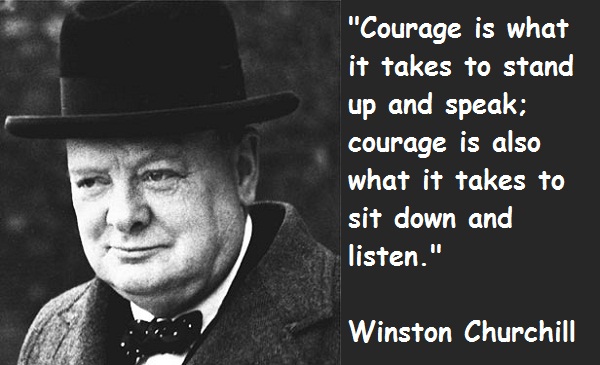 While I was reading about the “turbulent pushing busybody Winston” with his silk underwear, champagne, and Havana cigars, I immediately remembered a story I heard about him once. Someone once told me that Winston Churchill
So mid sentence, I left my toddler at the kitchen table putting together a completely unrelated paper penguin craft, and took a look at my library shelves. I have one biography and two books written by him. The books look like they belong to a set, a familiar set that I took home impulsively pieces at a time; but now that I am looking at them with curious research eyes they seem completely foreign and magical.
I still have much to read about The Bankers Who Broke the World, but a little visit with The Last Lion would be nice. What do you know about Churchill? Would you be interested in reading up on the great man with me?
Follow this link to read the next installment in the Lords of Finance discussion.
What’s Happening in March?
 Read Across America Day
Each year, young and old alike celebrate Read Across America Day on March 2 in conjunction with Dr. Seuss’ birthday. Join your fellow bookworms at Half Price Books for a special Dr. Seuss Story Time on Saturday, March 2, at 3 pm. The Humble location will be reading Horton Hears a Who and crafting clover pinwheels. Regular story time is every Wednesday at 10:30 am.
HPB Humble Book Club
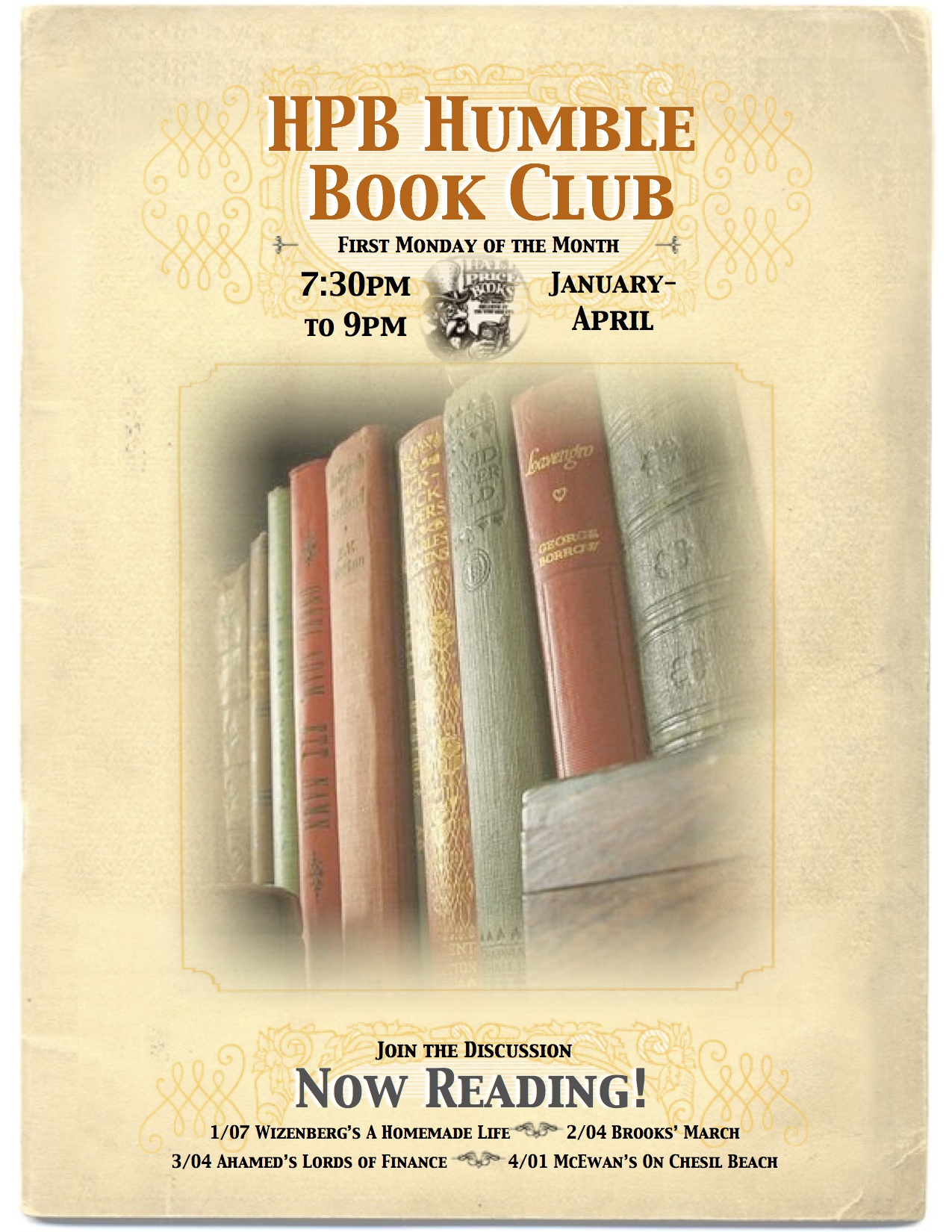
Looking to expand your reading pleasure? Join the discussion at our HPB Humble Book Club. We meet the first Monday of each month from 7:30 to 9 pm.
March – Lords of Finance
April – On Chesil Beach



Latte Art
A Tidbit from Miss Golightly

This is my second attempt at latte art! And it tastes good 🙂 – JJ Golightly
What’s Awesome on Audio
 FOR KIDS… actually, for adults too!
Title: The Bippolo Seed
Author: Dr. Seuss
Read by: Neil Patrick Harris
Until I went browsing through the audio book section of our public library I had never heard of The Bippolo Seed. I love Dr. Seuss, he’s pretty much always awesome… but the clincher for me picking up this edition to enjoy at home with the kiddo… why, Neil Patrick Harris of course!
Most child stars are annoyed by being referred to by the role that gave them their big name… I know Mark Wahlberg hates being called Marky-Mark and Maureen McCormack has made it quite clear that she is not Marcia Brady. But seeing Neil Patrick Harris’ name on that Bippolo Seed box, all I could think (and I apologize to NPH in advance!) was: Doogie Howser reads Dr. Seuss! What could be better!? Nothing, I tell you, nothing.
The fabulousness of Dr. Seuss combined with the sheer genius of Neil Patrick Harris is awesome. I love stumbling upon these kinds of wonderful things, because I’m certain my child is as tired of hearing my reading voice as I am of reading sometimes. I don’t feel so guilty passing the buck when I know someone as boisterous and Harris is taking the lead.
As for the “other lost stories,” there are a ton of talented stars featured on this audio book. Angelica Huston was surprisingly wonderful. Surprising not because she’s untalented or anything, just because I confuse her with Sarah Douglas and always imagine it was Huston, not Douglas, who played Ursa in Superman II (don’t ask me why)… and Ursa always appropriately gave me the creeps.
The point? Whether you’re a kid or a grown up, it’s never too late to hear The Bippolo Seed on audio.
Economic Education

Lords of Finance Discussion Part One (I am writing this only 150 pages into a 508 page book. I anticipate a series of reviews, much like how I handled Les Miserables in 2012, except over a short amount of time. I will have the book completed no later than March 4th, 2013)
Title: Lords of Finance: The Bankers Who Broke the World
Author: Liaquat Ahamed
Publisher: Penguin
Genre: Economics/ History
Length: 508 pages
Inevitably I read something and find about ten more things I need to read. My constant lament on this blog is why we didn’t read more source documents in school. So is it any wonder at all that while reading Lords of Finance for the HPB Humble Book Club I discover that I absolutely must have a copy of The Economic Consequences of the Peace
In addition to that title, I find myself longing to dive into more history books on the time period as well as full length biographies on a few of the people mentioned. You wouldn’t expect that kind of revelation out of reading a finance book, but Ahamed has a way of turning a phrase that makes interest and exchange rates, and the people directly responsible for their flux, fascinating.
I think this would be a great title to hand to a high school student during an economics course, it would definitely make the class more interesting. I enjoyed my economics classes in college, taught by a clever little man with a wonderful accent (Scotland? Liverpool? Not sure) and had a great sense of humor despite teaching all his courses at eight o’clock in the morning. But what I remember of high school economics was pretty cold and void of any kind of spunk. It was filled with boring formulas, worksheets, and a fairly heavy textbook that we read very little of. Obviously, the formulas are handy and important, but couldn’t there have been a little more meat? A little more perspective? A little more history?
Maybe living in a recession has weighed heavily in how I view the dollar, but I would like my child to grow to understand how much the economy effects politics, social customs, humanity, and art.
Idolizing money is a concern and a problem, but seeing how money fits into our lives and the bigger picture is important. So often we are taught that money is separate and that we should keep it that way, but the truth is money is never separate. Our history is riddled with money driven politics, so why is our history class and our economics class separate? Our religions are filled with instructions on what to do with our money, our philosophies rooted in our thoughts on whether to live richly or poorly and how rich and poor are defined. I think the history of banks, the dollar, and what your views are on the matter should all be addressed while you are learning how to calculate it, not as a completely separate train of thought.
 Ahamed’s Lords of Finance was recommended to me by a customer at Half Price Books, it was actually chosen for the Humble location’s book club by that same customer, and I am so glad I took his advice. We will be discussing the book as a group March 4th, 2013, starting at 7:30 pm. Additional members are welcome, so if you are interested in the book and are in the area, please join us. Treats are provided.
So far, the book is enlightening and informative, it covers a lot of the banking information provided in the documentary Zeitgeist without the haze of conspiracy theories and blasphemy. I imagine we will have a lot to discuss when we meet. Until then, I plan to share my own thoughts here.
Other titles in my personal Economic Library:
Adam Smith’s The Wealth of Nations
Thorstein Veblen’s Conspicuous Consumption
Craig Karmin’s The Biography of the Dollar
Thomas Stanley’s The Millionaire Next Door
Please share any titles you think should be added from a historical, philosophical, or sheer financial perspective.






 Anakalian Whims
The Price of Excellence
February 20, 2013 at 4:20 am (Education, Reviews) (Appleton, Bel Kaufman, books, college, education, May Sarton, novel, professors, reviews, social commentary, students, teachers, The Small Room, universities, Up the Down Staircase)
I have a love/hate relationship with education. Or should I say formal education.
I love to read, I thoroughly enjoy research. But most my teachers over the years would tell you I was a horrible student, if they even remember me. My work was typically mediocre, often done at the last minute. The ones that do remember me probably remember a fairly obstinate and argumentative irritant, not really someone you want filling out your back row.
Yet, I find myself longing for the chance to go back and get a frivolous Master’s degree. I watch movies only to be wooed by the montages of students in glorious libraries. I fall in league with nerds like Rory Gilmore and Felicity Porter and lean toward books like May Sarton’s The Small Room .
.
Rather than an emotional feminist vs. anti-feminist story one would expect from the setting, The Small Room is about exploring the many nuances of excellence in education… and the price of obtaining it for both teachers and students.
Frankly, education is such a moving and sensitive topic. Who isn’t brought to tears by Dead Poet’s Society? Who doesn’t stand and applaud Mr. Holland’s Opus or The Emperor’s Club ? Who doesn’t watch Finding Forrester on repeat?
Then on the counter balance… Who doesn’t laugh their butt off reading Kaufman’s Up the Down Staircase and acknowledge how utterly familiar it sounds?
While reading, I imagined Appleton to be a smaller version of Wellesley.
May Sarton’s The Small Room is delightful and truthful. Without full on hating on education altogether, it takes into careful consideration the heavy weight being a teacher or a student can be on a human being and their relationships.
I have a 1976 Norton Library edition (featured above) and I fell in love with the book immediately. Long before I picked it up to read it, Sarton’s novel was part of my personal collection. I remember being so struck by the green leafy cover, the musty smell, and the promise of imaginary academia while holding the book in the used bookstore. The novel has lived up to the promise of its cover (and its smell!) and I think any alumni or teacher would appreciate the ethical discussions within its pages as Sarton and her characters attempt to define the price of excellence.
Permalink 1 Comment