Weekly Low Down on Kids Books – or, my obsession with water work
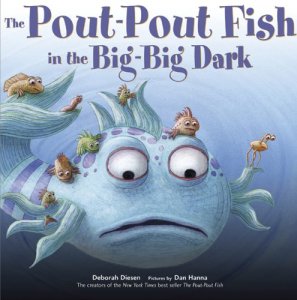 Title: The Pout-Pout Fish in the Big-Big Dark
Author: Deborah Diesen
Illustrator: Dan Hanna
Publisher: Farrar Straus Giroux
Although I hate the title, because I have a severe adversion to anything that even remotely sounds like it *may* be baby talk, I love this book. I picked it up at the library today, despite the title, because I have a soft spot for underwater children’s illustrations. Anything dealing with the ocean in the world of kid lit is right up my alley for whatever reason – it moves me. Just like I loved Memoirs of a Goldfish
My impulse for underwater things goes beyond kid book impulses every now and again. My guest bathroom is beach themed, a common choice, I believe, but part of my decor involves pictures from my honey moon and, yes, more books. The first that comes to mind is: Poseidon’s Steed
Impulses aside, once I read The Pout-Pout Fish in the Big-Big Dark to kiddo today, I was rather pleased. Kiddo was riveted, curled up in my arms, pointing out the fish on the page and colors she recognized, while soothed by the rhythm of the poem. She was in no rush for the story to be over and thoroughly enjoyed each and every page. If you have a toddler, you know how daunting it can be to find a book that your child doesn’t turn the pages ahead of the story for you, impatient for you to finish reading. The Pout-Pout Fish isn’t one to be rushed, and it was quite lovely.
P.S. This is a good title for dealing with older children who are scared of the dark.
Weekly Low Down on Kids Books – and other things

Title: The Fantastic Flying Books of Mr. Morris Lessmore
Authors: William Joyce and Joe Bluhm
With great reluctance, I turned this book back into the library yesterday on our way to the Miller Outdoor Theatre to see a live *free* production of Cinderella. Cinderella actually has no relevance to this story/review, I just wanted to throw that in there because the whole adventure was pretty awesome, we even rode a train.
“Morris Lessmore loved words.
He loved stories.
He loved books.
But every story has its upsets.”
But not every story is so beautifully written and illustrated. For the last two weeks, kiddo has been getting a daily dose of Mr. Lessmore, not just because I thought it was so fantastic, but because she thought it was pretty awesome too. Flying books!? It doesn’t get much better for that for a kid.
Shamefully, I have to admit that if I hadn’t read this book to my daughter, she may have forever missed out on Humpty Dumpty – merely because I am so busy sharing books with her that I often forget the nursery rhymes. Yet, Humpty Dumpty is alive and well in Mr. Lessmore’s world, so thankfully, that is one she will not miss out on.
Mr. Morris Lessmore is also a good way to introduce a small child to the issues of aging, life, and death. It’s a beautiful story of a man’s life with books, and like all men do, he grows old and passes. Presented with a combination of calm serenity and passion, this story kept in a child’s library could be a little piece of fantasy and reality which their subconscious can cling to forever.
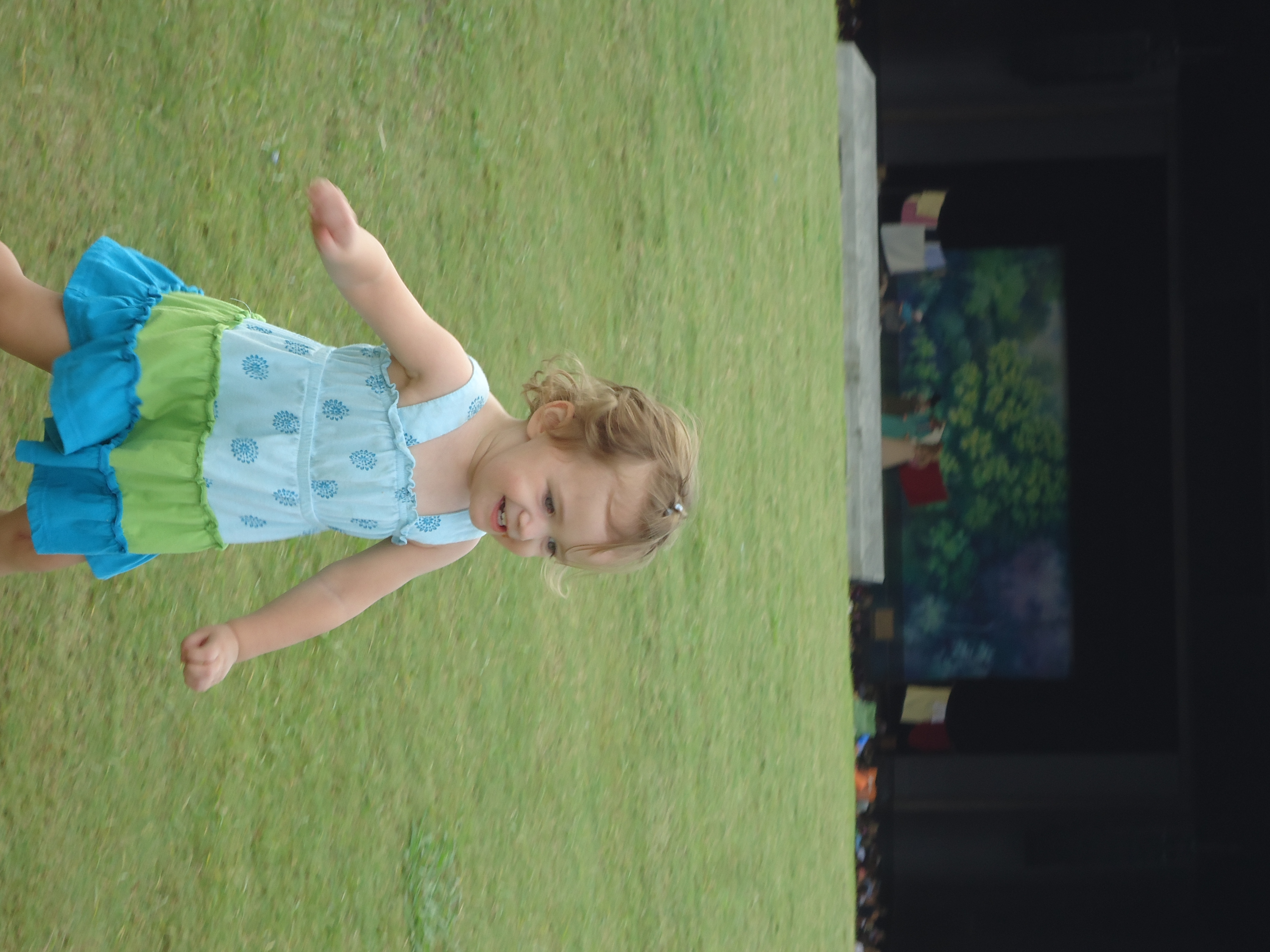
Part way through the very excellent play that I did not want to disrupt, kiddo got the urge to run. Cinderella still going strong in the distance.
Now, I am aware that I teased you a bit with that Cinderella business, so I suppose I cannot leave you hanging. This falls a bit under the When We’re Not Reading parts of my blog, but still encourages literacy and the arts. A.D. Players did a William Glennon play at the Miller Outdoor Theatre in Hermann Park yesterday morning. The weather was perfect as it kept teasing us with rain, but never did. The breeze was blowing, and there are so many things to do around the park that if/when your kiddos get antsy, its easy to take them for a walk or train ride.
To give you a full idea of how awesome these productions are, however, I am going to simply share with you a blurb from the program:
Founded in 1967 by Jeannette Clift George, A.D. Players pioneered a unique style of theater committed to producing plays and programs that uphold human value, offer creativity, and promote literacy and education. The company is one of Houston’s largest resident theater companies, impacting more than nine million people. Annually, the company produces five Mainstage shows and four Children’s Theater shows, and maintains a year-round Theater Arts Academy.
We share our mission with volunteers, community associates, and those who make our work possible through their support. For additional information, visit www.adplayers.org or call 713-526-2721.
Pretty neat, right?
Emma, my introduction to the Viking era
 Title: Emma: The Twice-Crowned Queen
Author: Isabella Strachan
Publisher: Peter Owen Publishers
Length: 192 pgs.
First of all, let me premise this by informing you that like the Catherines/Katherines of Henry VIII’s time, the name Elgiva/Emma runs rampant during the Viking age of England. For instance, the subject of this biography was born Emma but the English chose to call her by the Latin equivalent: Elgiva. Emma was the second wife of the widowed Ethelred, whose first wife’s name was Elgiva. When Ethelred (king of England under the Saxons) dies and his land then conquered by the Danes (while King Swegn ruled), a Dane named Canute (Cnut) came to power. Emma becomes his wife as well, but guess what? He already has a ‘wife’ named… any takers? anyone? anyone? Yep, Elgiva. This makes for some interesting reading, but Strachan eases the issue by always referring to Emma as only Emma and providing a handy-dandy cast list in the front of the book.
When I first heard of Emma, I expected a woman who was cunning and manipulative. Someone with political the intrigue of a Cleopatra or Elizabeth I. I thought I’d be reading about a woman with a deep political agenda, always out-playing others in a real-life chess match. Instead I found a woman who seems to me to have been more adaptive, reactive, a survivor constantly caught between a rock and a hard place. The Twice-Crowned Queen is less of a political master mind and more of a drowning victim always bobbing up to the surface of the water just moments before death.
She was young when she became the bargaining chip in an arranged marriage to King Ethelred. It was a political ploy of others that ensured the Normans and Vikings were kept at bay during a time of imminent war, as both her father and half-brother were Dukes of Normandy with close, friendly ties to the Vikings. After Ethelred dies and England taken over by the Danes, Canute is chosen to be the new King. The problem with this arrangement is that the Church and Cabinet wanted Emma to remain the Queen. It remained good political sense, but Canute already had a wife. Canute had a handfast wife, referred to as Elgiva of Northampton. From what I gather from Strachan, a handfast wife was the Medieval equivalent of a ‘Common-law wife.’ Handfast wives had all the political and societal rights of a true spouse, but were not recognized by the church. Later William the Conqueror’s own mother would turn out to be a Handfast Wife, which was why he was a Duke of Normandy but still got called William the Bastard.
Either way, there was a lot of drama surrounding Emma’s marriage to Canute. He seems to have been completely in love with Elgiva of Northampton and despite promising that Emma would be his only Queen and her children heir to the throne, Elgiva was the only one granted regency rights over her own lands and it was her son Harold that took the throne upon Canute’s death. Emma was again just a political pawn to keep the peace, and in keeping the peace was forced to send her own children (from Ethelred) away to grow up abandoned by their mother while fighting tooth and nail to keep her children by Canute in the running for the throne. There is a poem called Samiramis that I’d like to get my hands on, written by the Normans of the time, that tells their account of the entire incident.
What I initially saw as an intense woman ensuring each of her children had a chance to rule (as her son Harthacnut from Canute and her oldest son Edward from Ethelred both eventually become King, while her daughter was the Queen of Germany), after the biography I feel that most of this was just chance and circumstance. Harthacnut was indeed fought for to be King, but his half-brother Edward the Confessor became King despite his mother. Edward actually stripped Emma of all her political rights as soon as he gained the throne. One of the clenchers for me having been interested in studying her was that she was William the Conqueror’s great-aunt, but he did not seem to have much of a tie to her, he merely showed a bit of respect for his cousins.
I am glad I read the book. Although I am disillusioned about her character, I think she’s still mighty impressive and wonder why she was left out of my education. Reading this biography made me intensely interested in reading additional history on William the Conqueror and his mother Arlette (Herleva). Lady Godiva also makes a cameo appearance, which piqued my interest as well as a man named Olaf Haraldsson. As I always say, the more you read, the more you discover you need to read.
This book would make a great addition to a well-read 11-12 year old’s Medieval history curriculum. It is short, sweet, and informative of not just Emma but a huge piece of history that made the English monarchy what it later became. And I loved it.
The Bookaholics’ Guide to Book Blogs
 Title: The Bookaholics’ Guide to Book Blogs
Compiled by: Rebecca Gillieron & Catheryn Kilgarriff
Publisher: Marion Boyars Publishers
Length: 254 pgs.
I promised a review of this lovely book, and here it is; and trust me: the redundancy of a blogged book review of a book about book reviewing blogs is not lost on me. I suppose it goes without saying that I loved it. I love the front cover, I love the blogging snippets, I love the things Rebecca and Catheryn had to say (and yes, I am speaking of them with first name familiarity because I’m taking the liberties of pretending to know them after reading about their likes and dislikes regarding my favorite corner of the world: blogs and books and book blogs).
Catheryn Kilgarriff is the publisher at Marion Boyars Publishers and Rebecca Gillieron is the Senior Editor. This particular publishing company sounds relatively small, by their own descriptions, and cozy, and wonderful, and British. Of course, I am now obsessed and plan to purchase anything and everything I see published by Marion Boyars when shopping at brick and mortar stores. I also have dreams of one day being published by them, even though I live in Texas and the logistics of it may seem ridiculous. Simply, they made me fall in love with their little office and want to live and breathe everything that they live and breathe. Coincidentally, I already followed many of the blogs mentioned in the book, but the ones I didn’t already receive emails from on a weekly basis I hunted down so I can in the future.
Having been printed in 2007 and being about the internet world and e-books, it’s a little more than a bit outdated, but still completely worth the read. The book is not so outdated to feel foreign, just outdated enough to say, ‘Yeah, that doesn’t work any more’ or ‘That’s not quite a true statement these days.’ When those phrases pop up in my mind, though, they surprise me because it’s just barely on the verge of being old news, like their whole chapter on the future of e-books. I kept thinking, ‘Wow, I remember thinking that several years ago, but…’ the future is here, my friends, the future is here.
I think its wonderful how true Rebecca and Catheryn are to the things they like and appreciate. For example, the cover art for their book is actually from a blog they discuss in great detail and length called Dovegreyreader. The very end of the book even includes all the links for their favorite mentionables.
My favorite quote:
“For book reviews pages are not read simply for pleasure, they do not serve only to sway the purchasing power of the reader towards a particular author or trend. They are – in an ideal world at least – essential tools of cultural dialogue which stimulate informed debate, encourage new writing and shape the literary world.”
I read that, immediately unlined it, and nearly shouted: Yes, oh yes!
If you write a blog, read blogs, or love books or any kind of literary criticism, you should give this title a go.
Blasted Book Bouncing
 I have a tendency to bounce from book to book. I read a little bit of this and a little bit of that. Many times I sit and read one book in one sitting, but all the books that don’t get read with such vigor are subject to months on end of a chapter here and a chapter there.
Today, I polished off Cassandra Clare’s City of Lost Souls, and while the kiddo napped sat down with a pile of my ‘bouncing’ books. I started by picking up Susan Wise Bauer’s The History of the Ancient World. I read a few chapters of this throughout the week, and plan to have it completed by the end of the year so that I can spend 2013 reading the sequel The History of the Medieval World. Bauer provides excellent histories, educational guides, and other lovely lists, and at any given time there is something written by her sitting on my coffee table with a bookmark or post it note precariously shoved in its pages.
After 30 minutes or so with Bauer, I meandered over to my lit crit shelf and plucked up a copy of The Bookaholics’ Guide to Book Blogs
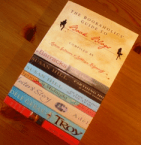 The Bookaholics’ Guide is lovely and when I am finished reading it, I shall post a full review worthy of a book dedicated to praising book reviewers. But for now, though entirely riveted and already 50 pages in – I am also distracted. Why? Because while reading about all these wonderful blogs and their dedication to their reading and writing and reviewing, there is a portion entirely devoted to the discussion of how tragedies always seem to win over comedies. That got my brain thinking back to the lovely Susan Wise Bauer and the list of novels she provides in The Well-Educated Mind
So of course, in my blasted book bouncing fashion, I pick up the book I am currently reading on the list: Invisible Man by Ralph Ellison. I read Chapter One the other day and immediately texted my kindergarten best friend who was an African-American Studies major during her undergrad years, that so far I loved it. (Because unfortunately, I hated reading Native Son by Richard Wright, despite the great skill involved in his story telling, and have been feeling incredibly guilty about it.) Of course, in the midst of being made painfully aware of the sad fact that as a human race we are enraptured by tragedies, I became engrossed in Chapter Two of Invisible Man and nearly died of the overwhelming coincidence.
 *SPOILERS*
If you have not read Invisible Man, I suggest you read no further. Unless, you are of the variety of readers who don’t care about spoilers, and then I may cheerfully say, read on.
Chapter Two includes the lengthy tale of Jim Trueblood, a man who has fathered a child with his wife as well as his own grandchild with his daughter in roughly the same time period. I have not yet read beyond Chapter Two, therefore cannot share with you the relevance to the Invisible Man’s story, or the book as a whole, but I can say that I felt ill after reading it.
Poor, oh poor Jim Trueblood (I say with intense sarcasm), who rolled over on his daughter while sleeping and having an odd dream, inserting his penis into her and *accidentally* fathered her child – to everyone’s horror.
Really?! Really!?
Of course, I must read on to discover the significance of it all. But I really don’t want to.
1. If your daughter is that old, she should not be sleeping between her two parents. I don’t care how poor you are. Put the child on the other side of the mother. That’s just common sense. What teenaged daughter wants to sleep between her two parents anyway?
2. I don’t know if I’m supposed to believe Jim Trueblood at this point or not, but I’m with the protagonist on this one – why the hell did Jim Trueblood get a hundred-dollar bill for knocking up his own daughter!? Its absurd. I have a hard time believing that people behave(d) this way.
3. I have a hard time buying this story in the light of the symbolism it supposedly represents: http://students.cis.uab.edu/archived/dlam/Jim%20Trueblood.html, but I look forward to seeing if the rest of the novel makes these proposals more clear. I’ve a huge soft spot for The Great Gatsby and The Natural, so you can imagine how much I adore symbolism.
 4. So far, the only African-American/ Black (depending on your version of what is politically correct) fiction that I have ever truly appreciated in my entire life has been the young adult Roll of Thunder, Hear My Cry
You see, the thing is, I hate reading a book and feeling like the sole purpose is to make me pity the protagonist. Mostly, because I think pity is the ultimate form of disrespect. Why would I want to read a character that I have no respect for? No matter how under the dog, one should not pity the protagonist nor hate them. One shouldn’t see them as less than themselves. I want to read about a fight for equality with some umph. I want to see them prevail over adversity, not wallow in their plight. The things I disliked about Native Son are the same things I disliked about Elizabeth Gilbert’s Eat, Pray, Love
These are the views the politically correct call me racist over, but I assure you that I have great respect for people of every color, culture, generation, and walk of life. Sometimes, I wish they had a little more respect for themselves. Just remember, never fight the good fight with a plea for pity – its a huge turn off.
Granted, I have only just finished Chapter Two… there is yet more to the story to discover. I hope it lives up to its classic reputation. I don’t want my distaste for unrelated titles to taint my views as I read this work.
My *Sometimes* Weekly Low Down on Kids…
…Books…
 An oldie but a goodie, kiddo picked up my old, ratty copy of Are You My Mother?
Are You My Mother? is fabulous for its repetition of the names of the animals. Two in October, she loves repeating nouns and discovering what things are called. As the little bird searches for his mother (and kiddo, startled says “Mommy? Where’d she go?” as we turn each page), he comes across a hen, a cow, and other animals. I’m very partial to the illustration of the dog featured on the front cover.
…Activities…
A great way to entertain a tactile child learning to count is to take a Tupperware container of dried beans and hand them a small bowl. They’ll spend a solid thirty minutes sorting and resorting the beans from container to container, pouring, touching, and lining them up in rows. If you have time to sit with them, its easy to go through their numbers and show them how to count the beans. Its great fun, and easy to clean up any mess with a broom or a handy household dog.
Also, in our house, we love to dance. I got a Ceremonial and War Dance
That’s it for this week. Tune in next week and I may have some more Weekly Low Downs on Kids somethings to share.
An Education in WWII
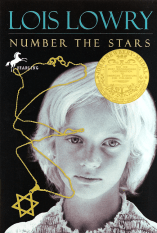 Title: Number the Stars
Author: Lois Lowry
Genre: Young Adult
I have been a long-time fan of Lois Lowry from my wonderful experience with The Giver
What I love most about reading this as an adult is that the book is set in Denmark, and King Christian X plays a role in the landscaping of the novel. I missed out on learning any details about King Christian X during my World War II studies in school, so I pretty much knew next to nothing about him prior to this novel. Not that there is a lot to learn about him in the pages of Number the Stars, but definitely enough to make me want to go pick up a biography on him the first chance I get. The little tidbit in the novel about how he rode the streets of Denmark on his trusty horse, Jubilee, every morning and greeted his subjects is so endearing and immediately peaks my interest. The story Lowry includes about the little boy and the Nazi soldier… ‘Where are his bodyguards?’ asked the Nazi. ‘All of Denmark are his bodyguards,’ the boy responded. Brilliant deviance and loyalty! Did this really happen or is this a bit of fiction Lowry put into her tale? Either way, I like it! Still, I mean to find out the answer!
I’ve decided this wonderful piece of literature will not be lost on the kiddo. The beauty of homeschooling is having the ability to choose the absolute must-reads for her education. The beauty of a classical education is being able to have age appropriate reading material for everything that is meant to be learned. No missing out on any particular piece of literature because it hits the wrong age group when you’re studying any particular topic. Number the Stars has been added to the list; and yes, there really is a list. (It’s never too soon to start writing curriculum!) The other beauty of homeschooling is that as a parent your education is never quite done either. There will always be something to read – something to study – to make sure I don’t miss a beat while schooling the kiddo.
For more about the occupation of Denmark and the nation’s amazing effort (and success!) in saving their Jewish population during the war, visit this site: http://www.auschwitz.dk/Denmark.htm
A Book I mean to check out:


Weekly Low Down on Kids Books 8/08/12
 Story time at Half Price Books Humble has been quiet, has been loud, has been vacant, has been crowded. Today, it was just right. We had 9 children, all bright eyed and ready for me to read to them.
I always find it refreshing to be around other people who read, even if they are little people. So it was with great joy that I discovered Hooray for You! A Celebration of You-ness
This one is definitely a must-have, and I look forward to finding more of Richmond’s treasures tucked away on the shelves of Half Price Books. According to her website, her books are available through Barnes & Noble as well as most other book retailers.

Political Statements in Art
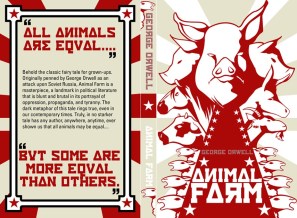 Title: Animal Farm
Author: George Orwell (real name: Eric Blair)
Length: 80 pages
“Political Statements in Art” sounds a little scary, intimidating. I grow weary of political statements. But I am a reader, and among the list of most amazing authors of all time, though, great activists can be found. Ayn Rand
Although I had a general understanding of the novella, and the statement it was going to make, I was surprised when the animals all had real names. Silly, I know, I just hadn’t expected that. Not that I expected them to be called pig, horse, or dog, it was just one of those things I hadn’t thought to think about prior to reading the book. Of course, I should have anticipated nothing less from Orwell, after all, the man was a genius. In good literary form, Napoleon represents a villain, Boxer is strong, Snowball is the opposite of Napoleon, Squealer is the epitome of propaganda, and Mr. Jones is a typical neighbor you might love to hate – the human. It is allegory at its finest.
Yet, I pretty much hated it. How did this happen? I adore Orwell! I do, I really do. I just could not get into the anthropomorphism. When I read animals personified to represent people, I find I don’t want them to be JUST like people. I want my fuzzy mole to be a fuzzy mole who talks (Wind in the Willows), I want my mice to still live under floor boards and not have day jobs, even if they cook and clean (TumTum and Nutmeg), and so on. Obviously, Orwell’s intent was for us to see ourselves as we are, “The creatures outside looked from pig to man, and from man to pig, and from pig to man again; but already it was impossible to say which was which,” along with the dangers of communism and totalitarianism.
But who wants to be reminded of that?
Just kidding. Truly, I see the merits of Animal Farm, and at another time I just may enjoy it. But today, right now, this moment… I did not. Still, I love Orwell. I (usually) love to read his work, and (always) aspire to be more like him. In Why I Write, he said:
“From a very early age, perhaps the age of five or six, I knew that when I grew up I should be a writer. Between the ages of about seventeen and twenty-four I tried to abandon this idea, but I did so with the consciousness that I was outraging my true nature and that sooner or later I should have to settle down and write books.”
Nothing speaks to me more. I have been journaling, writing stories, and using the written word as my own catharsis my whole life, since before I could do much more than copy letters. Perhaps I will never be the caliber of writer I’d like, but always and forever I shall write. So because I write, also shall I read.
A Grimm World
The new season of Grimm starts August 13, 2012; roughly two weeks until round two! Because of this, my husband, who just fell in love with the show via Hulu, has been making me watch season one. I say “making me” as though it is this incredible chore, but in reality, it is a relaxing date-night type activity for us once the kiddo has gone to bed.
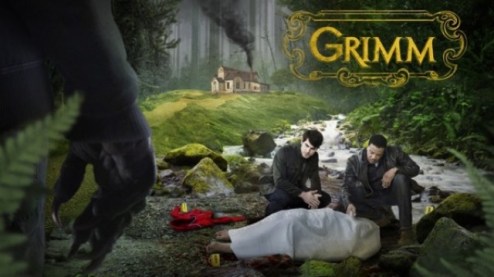
The NBC original series portrays the Brothers Grimm as magnificent demon hunters, and the main character their detective descendant. As a Grimm, Nick sees demons for what they are and can catch the bad guys of urban legend with his handy dandy Grimm family heirlooms as well as the help of the police department. It’s CSI meets Van Helsing
So, as we wait for 9pm (kiddo’s bed time) to hit every evening, I have decided to start reading my copy of Grimm’s Fairy Tales
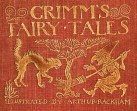 The stories are mostly terrible. In theory I love mythology and folklore, but what I’m discovering more and more is that I adore lengthy retellings rather than the original short stories. Yet, I’m a serious advocate for source documents. Just as I don’t want to watch the TV show Grimm without reading the original stories – I definitely would be appalled at myself for reading a fancy retelling in the form of a novel without reading the original collection of tales. As in most things, I believe in the principle of it.
I found The Little Farmer to be especially awful. What a deceitful and greedy group of people! And the fact that this horrible little man becomes the sole proprietor of the town and all the riches therein is quite appalling. I enjoy stories with a solid moral, a bigger picture, lessons for life about the merits of goodness. Instead, The Little Farmer breeds selfishness and sociopathic characteristics. The Life Lesson being: the cheaters that are most cunning rule the roost. Of course, this is a valid truth in most societies, but in my perfect story I want there to be inspiration to persevere under the pressure to keep up with the Joneses (or just kill them off if you can’t), and do something great in your life. The Little Farmer may walk off a wealthy man, but he has no friends and he has not lived a fulfilling life. Be proud of hard work, rather than trickery.
 I am not a fan of people getting rewarded for bad deeds or laziness. Just as I cannot get my novel published until I finish writing it (blaming my main character Dani for being elusive and moody when I’m trying to get her life organized), the princess shouldn’t get a Frog Prince to marry when she hasn’t been anything but mean to him.
There are, however, wise stories in the Brothers Grimm, not just the “only people who share are the people who don’t have anything” kind (a real-life adage from my own father). The Nail is the very story which proves one of my old martial arts instructors’ words correct: slow makes fast; or, as the Grimms tell us: Make Haste Slowly. Stories like these, though the horse suffered much for the sake of the warning tale, is what keeps me reading and what reminds me that the kiddo will benefit from growing up with the stories as well.





 Anakalian Whims